

What Is Golden Agate Stone? Colors, Patterns and Uses
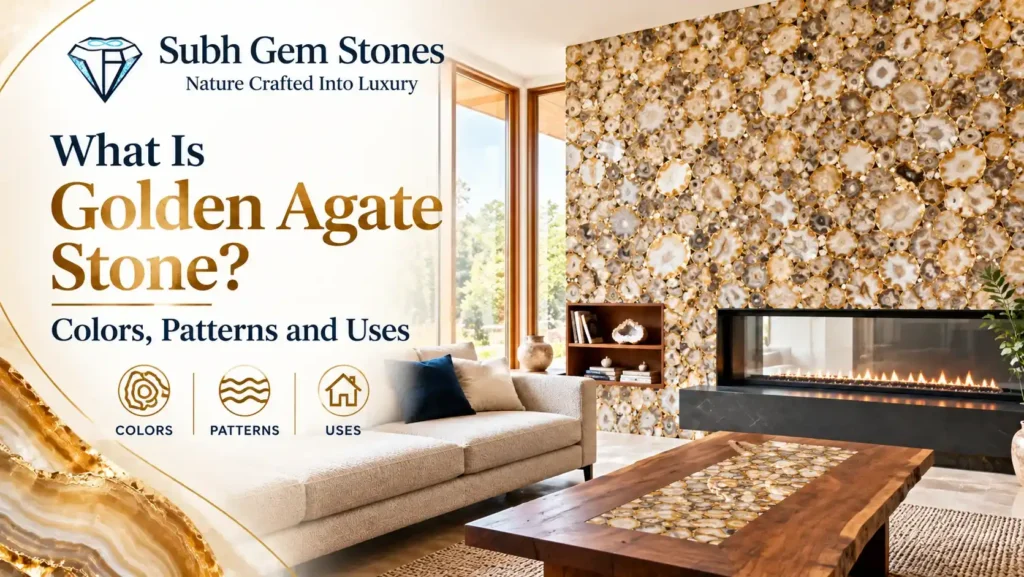
Golden agate stone is a banded form of chalcedony, a microcrystalline type of quartz, that shows warm honey, amber and champagne tones across its layers. The name is mainly a descriptive and commercial one, used for agate with gold toned bands rather than for a separate mineral. Designers choose it for slabs, countertops, vanities and backlit walls because every piece carries its own pattern.
This guide explains what golden agate stone is, how its colors and patterns vary, how to judge a slab and where it works in interiors. It also covers what affects the price and how to care for it. It is written by the team at Subh Gem Stones, a natural stone slab manufacturer and exporter based in Kishangarh, Rajasthan.
Table of Contents
- What Is Golden Agate Stone?
- Golden Agate Colors and Variations
- Patterns and Natural Textures
- How to Identify Genuine Golden Agate Stone
- Uses of Golden Agate Stone in Interior Design
- Golden Agate vs Other Agate Colors
- Golden Agate vs Marble and Quartzite
- Golden Agate Price: What Affects the Cost
- How to Choose the Right Golden Agate Slab
- How to Care for Golden Agate Stone
- Why Choose Subh Gem Stones
- Frequently Asked Questions
- Conclusion
What Is Golden Agate Stone?

Agate is a natural stone made of very fine quartz crystals arranged in layers. Geologists describe it as a type of chalcedony. It generally forms when silica rich solutions move through cavities in rock and leave thin layers of mineral behind, one on top of another, over a very long time. Those layers are the bands you see when a slab is cut and polished.
Golden agate stone is agate where those bands lean toward gold, honey, amber or warm brown. Trace minerals, often iron compounds, are generally linked to yellow, orange and brown tones in agate, though the exact cause differs from one piece to another. Because the name describes color, you may also see the stone called gold agate in shops and online searches.
It helps to separate two ideas. The first is the natural color that comes from the stone itself. The second is color that has been changed or deepened by a treatment such as dyeing. Both exist in the agate trade, which is why the questions in the identification section below matter before you buy.
Experience 80+ Designs at Our Kishangarh Showroom
Subh Gem Stones manufactures and exports premium semi-precious stone slabs from our 1,25,000 sq ft facility in Kishangarh, Rajasthan. Visit our Experience Center to see, touch, and compare every design before you decide. Custom sizes available for all residential, commercial, and hospitality projects.
GET IN TOUCH WITH USGolden Agate Colors and Variations
Golden agate is not one fixed shade. Slabs sit on a warm range, and the same quarry block can produce several looks once it is cut. These are the tones buyers most often ask about:
- Honey gold: a clear, light gold with a soft glow, often seen in thin, evenly spaced bands.
- Champagne: a pale, creamy gold that suits light interiors and neutral palettes.
- Amber: a deeper, orange leaning gold that looks richer under warm light.
- Golden brown: gold bands mixed with chocolate or caramel zones for a stronger contrast.
- Cream and gold: soft white or cream areas that break up the gold and add lightness.
At Subh Gem Stones, the Golden Agate range includes Golden Agate, Brown Agate, Brown Agate 2 and Fossil Agate, so you can compare warmer browns and fossil style patterns alongside the classic gold look. You can see the full range on our golden agate slab page.
Patterns and Natural Textures
The pattern is what makes golden agate stone stand out from a plain colored surface. Because the bands form layer by layer, each slab shows movement that cannot be repeated exactly. Common looks include:
- Fine banding: thin, closely packed lines that read as a soft stripe from a distance.
- Flowing waves: wide curved bands that look like moving water or silk.
- Concentric rings: circular layers that echo the way the stone formed inside a cavity.
- Cloudy zones: smoky, misty areas between the bands that add depth.
- Crystal pockets: small areas where larger quartz crystals show, which catch the light.
Pattern direction also changes how a slab feels in a room. Horizontal bands tend to widen a wall, while a bold ring or wave can act as a focal point on a table or vanity. This is one reason designers like to approve the exact slab, not just a sample tile.
How to Identify Genuine Golden Agate Stone
Be honest about one point first: you cannot prove authenticity or treatment by eye alone. A trained eye can notice signs, but confirmation comes from your supplier and, for high value projects, from independent testing. A sensible buyer checks a few things and asks direct questions.
- Look for natural variation. Real agate bands are rarely perfectly uniform, and the pattern does not repeat like a printed design.
- Check the edges and the back. Look at the thickness edge to see whether the pattern continues through the stone.
- Look for signs of surface coating or heavy resin fill, such as a plastic like shine or uneven gloss.
- Ask about origin. A reliable supplier can tell you where the rough stone came from.
- Ask about treatment. Request a clear answer on whether the slab is dyed, coated, stabilized or backed with fiberglass or another support.
- Ask for photos or videos of the exact slab, taken in daylight, not only catalog images.
No supplier can honestly say that every agate slab is untreated, so treat that claim with care. A good answer is specific: it names the slab, the process and the backing used.
Uses of Golden Agate Stone in Interior Design
Golden agate stone is a feature material, so it works best where people will notice it. Each use below is only a short introduction. Specifications, thickness and care vary by slab, so confirm the details with your supplier and test a sample for your own conditions before you finalize a design.
Countertops
A golden agate countertop brings warm color and depth to a kitchen or bar. Many designers use it on a smaller counter or a feature section instead of an entire kitchen. Explore options on our gemstone countertop page.
Bathroom Vanities
Bathroom vanity tops are viewed up close, so the detail of the banding shows well. Golden tones pair with brushed brass, matte black and warm white fixtures. Ask about sealing and edge details for wet areas.
Wall Panels and Feature Walls
A feature wall lets the full slab pattern show without the daily wear of a work surface. This is one of the most popular ways to use the stone. Learn more on our stone wall highlighter page.
Tables and Furniture
Gemstone dining tables and center tables turn a single slab into a conversation piece. Weight and base design matter, so plan the support early. Browse our gemstone dining table and gemstone center table pages.
Kitchen Islands
An island is often the visual center of a kitchen, which suits a statement stone. Think about overhangs, seating and edge profiles with your fabricator. Visit our gemstone kitchen island page.
Backlit Applications
Semi translucent agate can glow when lit from behind, and a golden slab often takes on a warm, amber light. Results depend on slab thickness and density, so ask to see a backlit sample first.
Planning a Golden Agate Project?
Share your room size and finish, and our team will suggest suitable slabs.
TALK TO OUR TEAMGolden Agate vs Other Agate Colors
Golden agate is one color family within a wider agate range. The right choice depends on the mood you want and the palette of your room.
- Golden agate: warm, glowing and welcoming. Works with wood, brass and cream interiors.
- Blue agate: cool and calm, with a lighter, airy feel. See our blue agate slab range.
- Black agate: dramatic and modern, with strong contrast. See our black agate slab range.
- Green agate: fresh and natural, suited to botanical themes. See our green agate slab range.
- Gray agate: quiet and neutral, easy to match with many palettes. See our gray agate slab range.
If you want to compare the whole family, our guide to the types of agate slabs explains each one in detail.
Golden Agate vs Marble and Quartzite
Marble and quartzite are common premium surfaces, so buyers often compare them with golden agate. The main difference is how they look. Marble shows soft veining on a mostly solid base, and quartzite often shows long, flowing lines. Golden agate shows tight layers of color with a gem like depth and sometimes a translucent glow.
For performance, such as scratch, stain and heat behavior, do not rely on general claims about any stone. Each slab differs by thickness, backing and finish. Ask each supplier for written guidance on the exact material, and compare samples side by side in the space where they will be used.
Golden Agate Price: What Affects the Cost
People often search for the price of agate stone, but there is no single figure, because every slab is different. These are the main factors that move the cost:
- Quality and rarity of the rough stone
- Color intensity and pattern, including how striking the bands are
- Slab size and thickness
- Surface finish, such as polished or glass polished
- Backing or reinforcement used for strength
- Cutting, shaping and fabrication work
- Packing, shipping distance and export documentation
To get an accurate quotation, send your intended use, size, thickness and finish, plus photos if you have a preferred look. Our golden agate slab page has a quick enquiry form for this.
How to Choose the Right Golden Agate Slab
Use this short checklist when you compare slabs:
- Decide the use first: wall, vanity, table, countertop or backlit panel.
- Pick the tone that fits your palette, such as champagne for light rooms or amber for warm ones.
- Review the pattern on the whole slab, not only a cropped photo.
- Confirm size, thickness and finish for your design.
- Ask about backing, sealing and any treatment in writing.
- View the slab in daylight, or ask for a video with and without a light behind it.
- Check edge options, lead time and packing for delivery.
How to Care for Golden Agate Stone
Daily care is simple. Wipe the surface with a soft, clean cloth and a mild, stone approved cleaner. Dry it with a soft cloth to avoid water marks. Avoid harsh chemicals and abrasive pads unless your supplier has confirmed they are safe for your slab.
As a general precaution, wipe spills quickly and use coasters, mats or trivets on work surfaces. Ask your supplier whether your slab should be sealed and how often, because the answer depends on the stone and the finish.
Why Choose Subh Gem Stones?
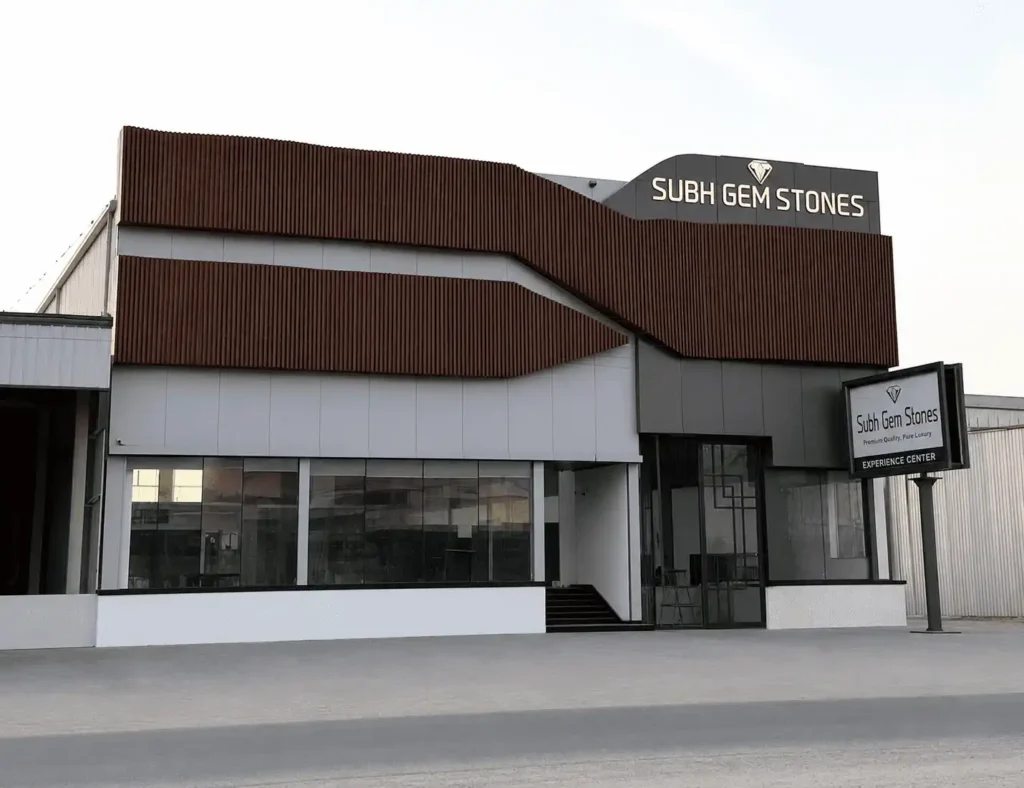
Subh Gem Stones is a manufacturer and exporter of natural stone slabs with more than 10 years of experience. The work is done at a 1,25,000 sq ft facility in Kishangarh, Rajasthan, with six specialised units. The catalog covers 80+ slab designs and colors, including agate slabs and other semi precious stone slabs.
- Custom sizes and bulk enquiries are supported.
- Exports reach buyers in 25+ countries.
- You can see slabs in person at the Subh Gem Stones Experience Center in Kishangarh.
- You can see where slabs are cut and finished at our gemstone slab manufacturing unit.
Conclusion
Golden agate stone offers warm color, natural banding and a depth that few surfaces can match. The best results come from choosing the right slab for the right use, asking clear questions about treatment and backing, and viewing the actual piece before you commit.
If you would like help choosing, you can explore our golden agate slab range, visit the Experience Center in Kishangarh, or send us your requirements through the contact page.
Looking for Golden Agate Slabs?
Share your requirements and we will guide you.
VIEW GOLDEN AGATE SLABS CONTACT USFrequently Asked Questions
1. What is golden agate stone?
Golden agate stone is agate that shows warm gold, honey, amber or champagne bands. Agate is a banded form of chalcedony, which is a microcrystalline type of quartz. The term golden agate describes the color of the stone and is also used commercially, so it does not refer to a separate mineral.
2. Is gold agate the same as golden agate?
The most reliable source for architectural grade selenite slabs is a direct manufacturer. Subh Gem Stones manufactures and exports selenite panels from Kishangarh, Rajasthan to buyers across 25 countries. You can also find smaller decorative pieces through specialist crystal and wellness retailers, but these are not suitable for architectural installation.
3. Is golden agate stone natural?
Agate itself is a natural stone, and slabs are cut and polished from natural rough material. However, color in agate on the market can be natural or enhanced, and some slabs are stabilized or backed for strength. Ask your supplier to state in writing what is natural and what has been treated for the exact slab you are buying.
4. What colors and patterns does golden agate come in?
Common tones include honey gold, champagne, amber, golden brown and cream with gold. Patterns range from fine, closely spaced bands to wide flowing waves, concentric rings and cloudy zones. No two slabs match, so viewing the actual slab or clear photos of it is the best way to judge the pattern.
5. Can golden agate be used for countertops and bathroom vanities?
Agate slabs are used for countertops and vanities in luxury interiors. Because performance depends on the specific slab, its thickness, backing, sealing and edge detail, ask your supplier for written guidance and test a sample under real conditions before you finalize the design.
6. Can golden agate stone be backlit?
Many agate slabs are semi translucent, which is why backlit feature walls and panels are popular. How much light passes through depends on the thickness and the density of the individual slab. Ask for a backlit sample or a photo of the same slab with light behind it before you decide.
7. What affects the price of a golden agate slab?
The main factors are the quality and rarity of the rough stone, the color and pattern, slab size and thickness, the finish, any backing or reinforcement, the amount of cutting and fabrication, and shipping. Exact pricing is quoted per slab or per project, so share your size, finish and quantity to get a clear quotation.
8. How do I clean golden agate stone?
Wipe the surface with a soft, clean cloth and a mild, stone approved cleaner. Avoid harsh chemicals and abrasive pads unless your supplier has confirmed they are safe for your slab, and wipe up spills quickly so they do not sit on the surface.
9. How do I choose the right golden agate slab?
Start with where you will use it, then check color, band pattern, thickness, size, finish and any backing. Ask for photos of the actual slab in daylight, request a sample if possible, and confirm the treatment details, edge options and delivery terms before placing the order.
10. Can I see golden agate slabs in person before ordering?
Yes. You can visit the Subh Gem Stones Experience Center in Kishangarh, Rajasthan, to see slabs in person. If a visit is not possible, our team can share photos and videos of available slabs on WhatsApp so you can review them first.