

Tiger Eye Stone Slab — Properties, Uses and Interior Design Ideas

Tiger eye stone slab is one of the most visually extraordinary natural stone surfaces available in luxury interior design. Prized for its rare chatoyant optical effect, which produces shimmering bands of gold, bronze and deep brown that shift and move as viewing angles change, tiger eye creates a living and dynamic surface quality unlike any other natural material. At Subh Gem Stones, we manufacture and export premium tiger eye slabs from our 1,25,000 sq ft facility in Kishangarh, Rajasthan to luxury homes, hotels and design studios across 25 countries. This guide covers everything you need to know about tiger eye stone, its six natural varieties, interior applications and how to choose the right variety for your project.
What is Tiger Eye Stone?
Tiger eye is a natural semi-precious gemstone belonging to the quartz mineral family. It is formed through a geological process called silicification, where fibrous minerals such as crocidolite asbestos are gradually replaced by silica dioxide while retaining the original fibrous structure of the mineral. This internal fibrous silica structure is what creates chatoyancy, the rare optical effect that makes tiger eye one of the most visually distinctive natural stones in the world. Tiger eye stone is opaque, with a surface hardness of 6.5 to 7 on the Mohs scale, making it durable and suitable for countertops, flooring, wall cladding and furniture applications in luxury interiors. It is found in South Africa, Namibia, Brazil, India and Australia and is processed into slabs at manufacturing facilities such as our Kishangarh, Rajasthan production plant.
What is Chatoyancy? Understanding the Tiger Eye Optical Effect
Chatoyancy is a rare optical phenomenon in which a polished gemstone or mineral displays a shimmering, moving band of reflected light that shifts across the surface as the viewing angle or light source changes. The name comes from the French word ‘chatoyer’, meaning to shimmer like a cat’s eye. In tiger eye stone, chatoyancy is produced by light reflecting off the parallel fibrous silica structures within the mineral. As these fibres are all aligned in the same direction, they collectively reflect light at the same angle, producing a concentrated band of light that appears to move across the surface. This effect is most dramatic on tiger eye slabs under directional lighting such as spotlights, pendant kitchen lighting and natural window light that changes angle throughout the day. Among all natural stones used in interior design, tiger eye is one of the very few to exhibit genuine chatoyancy, which is why it is so highly valued as a luxury surface material.
Tiger Eye Stone Varieties — All Six from Subh Gem Stones
Subh Gem Stones offers six natural tiger eye slab varieties, each with a distinct tonal character and chatoyant quality suited to different interior design applications and colour palettes. Golden Tiger Eye is the most recognised variety, displaying rich warm gold, amber and deep bronze chatoyant bands. The warm golden tones complement dark cabinetry, warm timber floors and metallic hardware in contemporary and transitional kitchen and bathroom designs. Blue Tiger Eye Brick, also known as Hawk’s Eye, displays cooler chatoyant bands of blue, blue grey and blue green tones. The structured brick pattern format creates a more architectural surface quality suited to contemporary and dark toned luxury interiors. Blue Tiger Eye Random features the same cool blue chatoyancy in an organic, free form pattern that creates a more fluid and naturalistic surface character than the brick format. Tiger Eye Random shows natural random banding in golden and warm brown tones without a structured pattern, creating an organic and varied surface that suits biophilic and nature inspired interiors. Tiger Eye Wild displays the most dramatic patterning of all the golden varieties, with bold colour contrast and strong chatoyant bands that create a particularly eye catching surface suited to statement furniture and feature wall applications. Red Tiger Eye features deep red and bronze chatoyant formations, the rarest variety in our collection, offering a warm and intensely dramatic surface quality unlike any other tiger eye variety.
Tiger Eye Slab in Interior Design
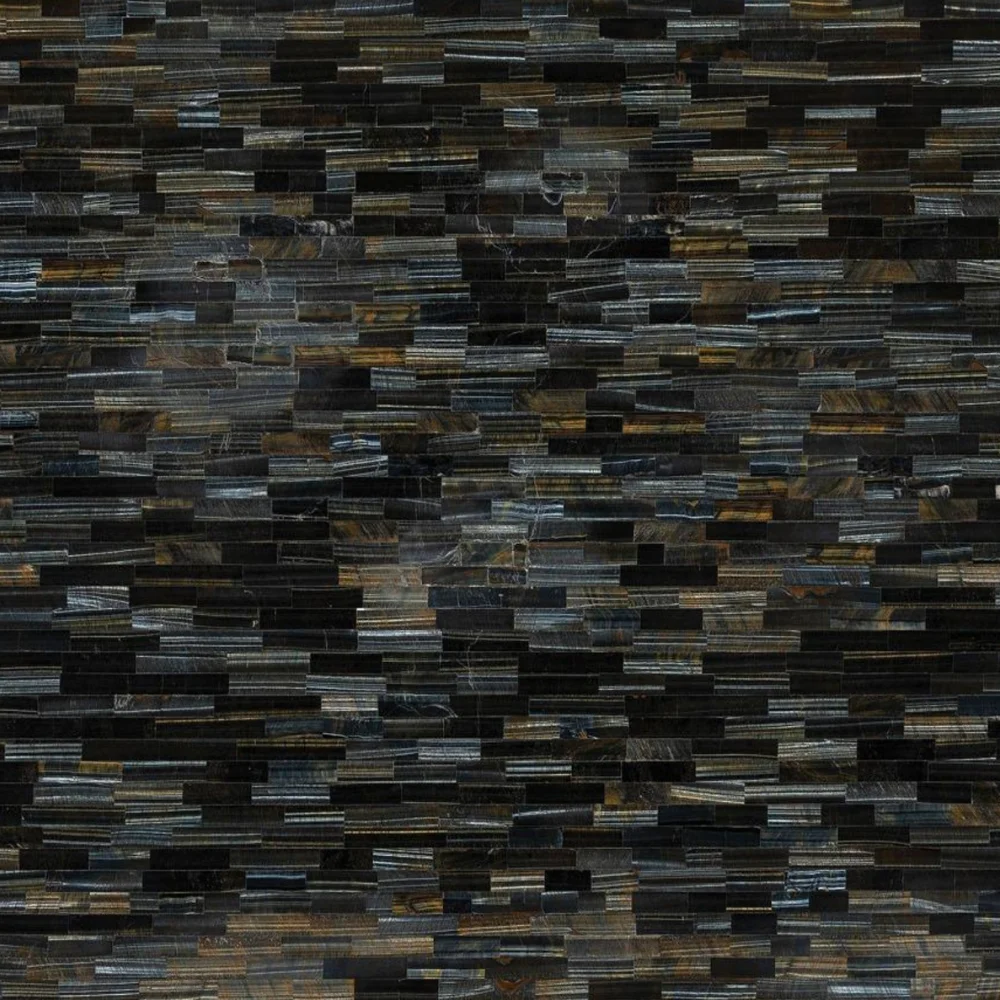
Tiger eye stone is suited to a wide range of luxury interior applications. The following covers the most popular uses and design considerations for each application type.
Tiger Eye Countertop
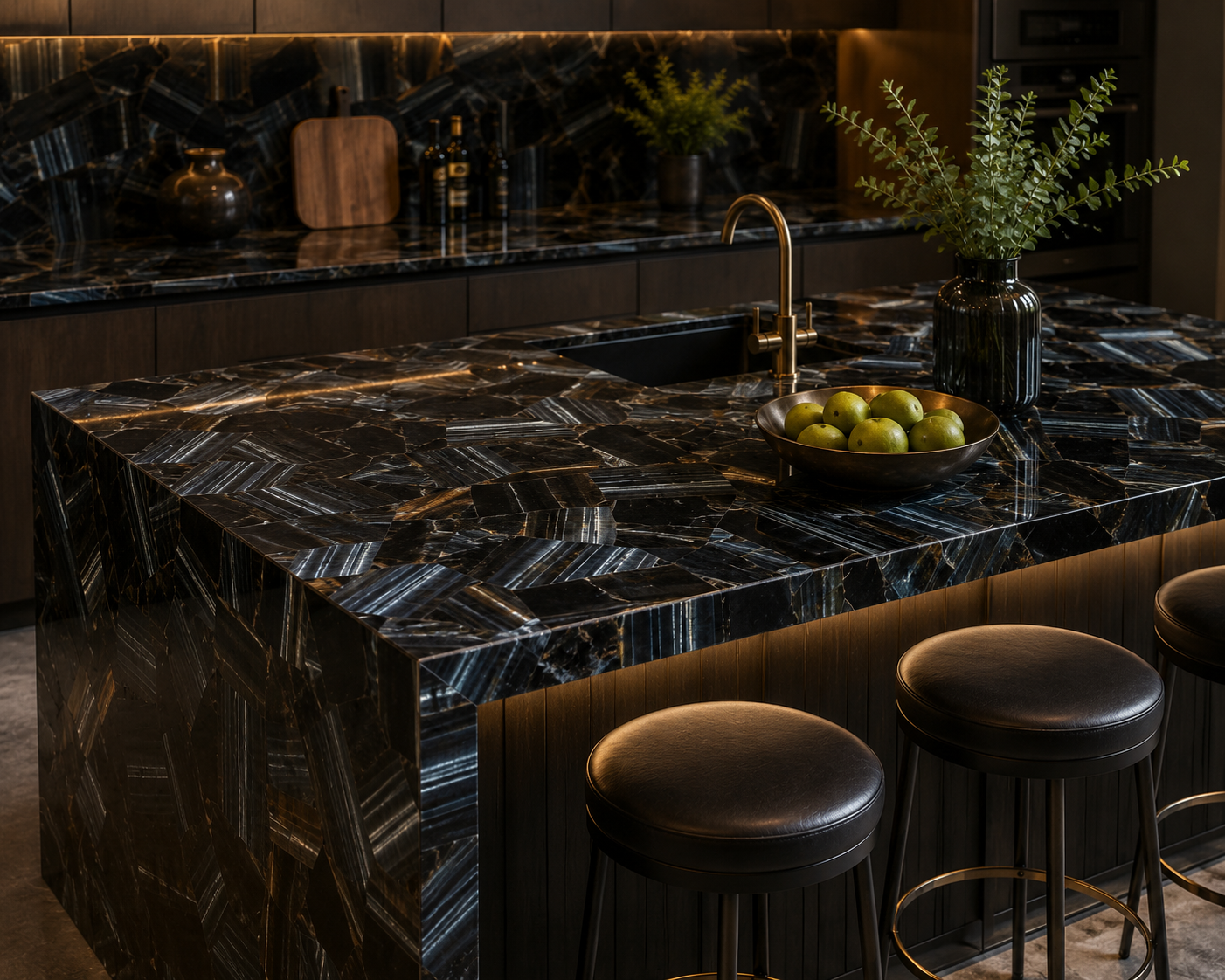
A tiger eye countertop brings bold optical drama and a genuinely rare surface quality to any kitchen or bathroom. The shimmering chatoyant bands interact beautifully with kitchen pendant lighting and natural daylight, creating a surface that appears different at every hour of the day. Tiger eye countertops work particularly well in kitchens with dark cabinetry, warm timber hardware and metallic fixtures where the golden tones of the stone create a powerful visual contrast. Subh Gem Stones manufactures tiger eye countertops in custom dimensions up to 130 x 76 inches with 2 cm and 3 cm thickness and square or bullnosed edge profiles.
Tiger Eye Kitchen Island
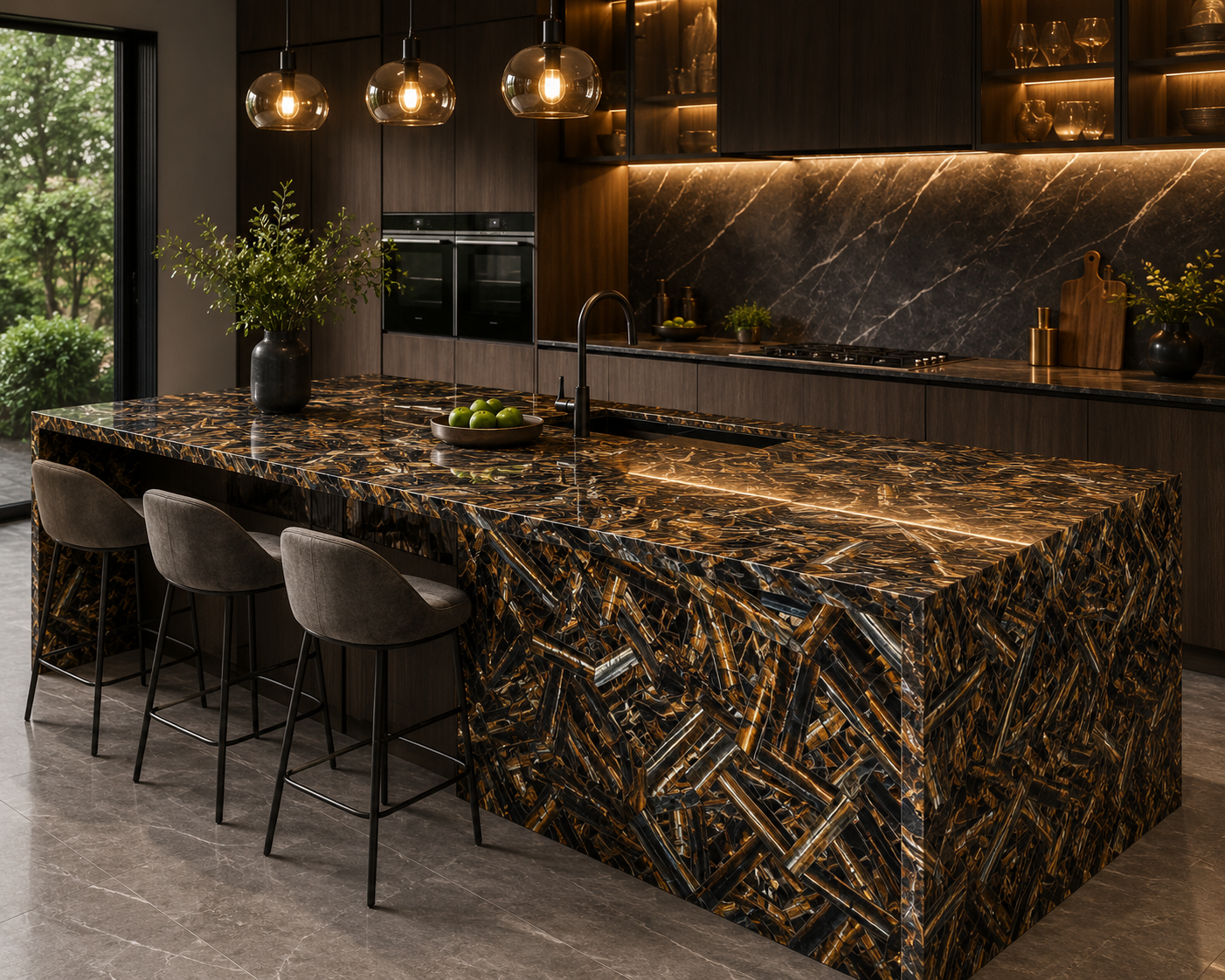
A tiger eye kitchen island slab creates a spectacular centrepiece that makes the kitchen the most memorable room in any luxury home. Available in large format sizes, tiger eye kitchen island tops from Subh Gem Stones are cut to your exact project dimensions with polished or glass polished finishes from our Kishangarh manufacturing facility.
Tiger Eye Wall Highlighter
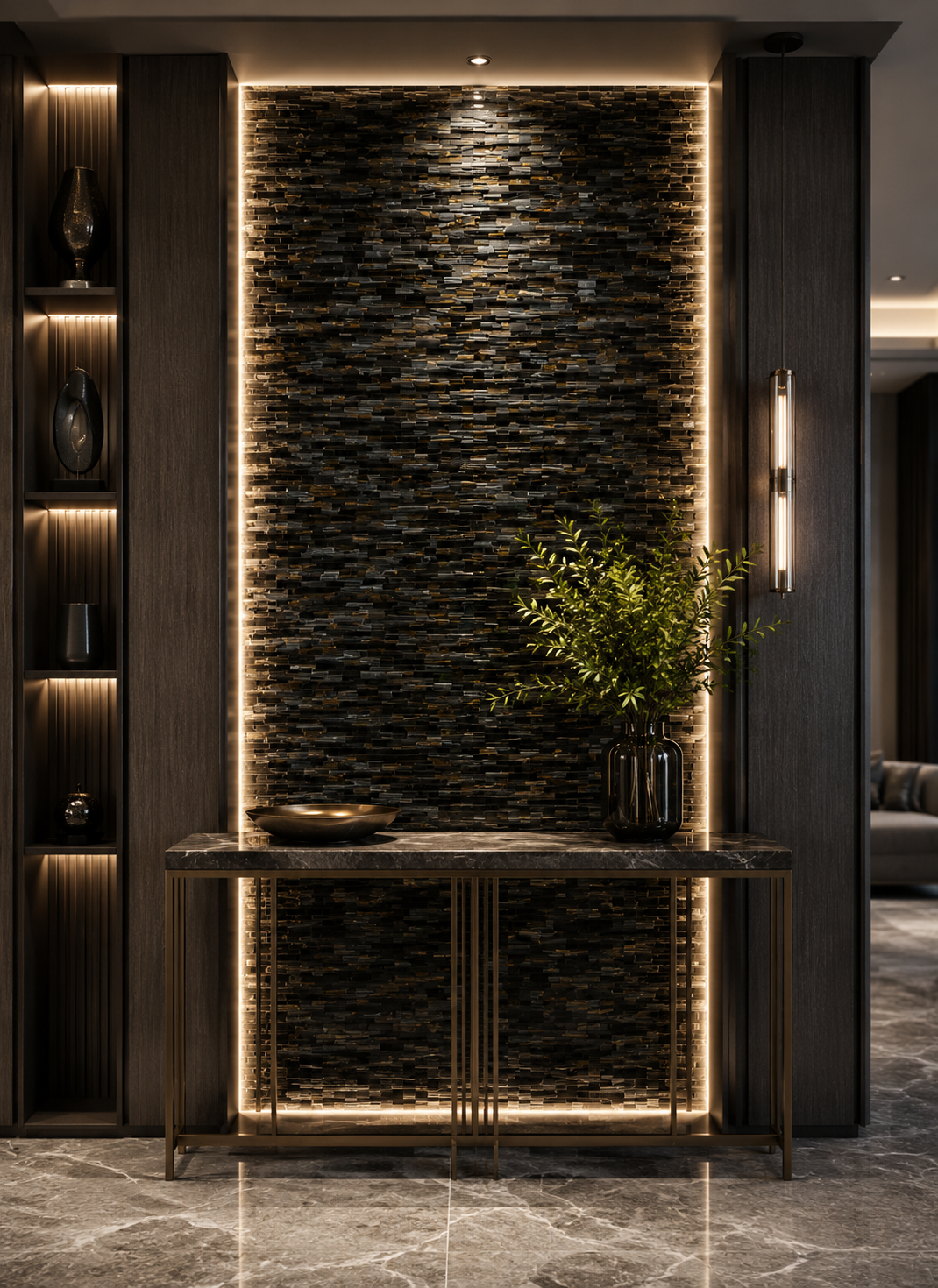
A tiger eye wall highlighter panel creates one of the most visually dynamic feature walls available in natural stone. The chatoyant bands shift and shimmer with ambient and directional light, creating a wall that is literally different at every time of day. For a spectacular installation, tiger eye wall panels respond particularly well to backlit setups where the directional light amplifies the chatoyant effect across the full panel surface.
Tiger Eye Dining Table
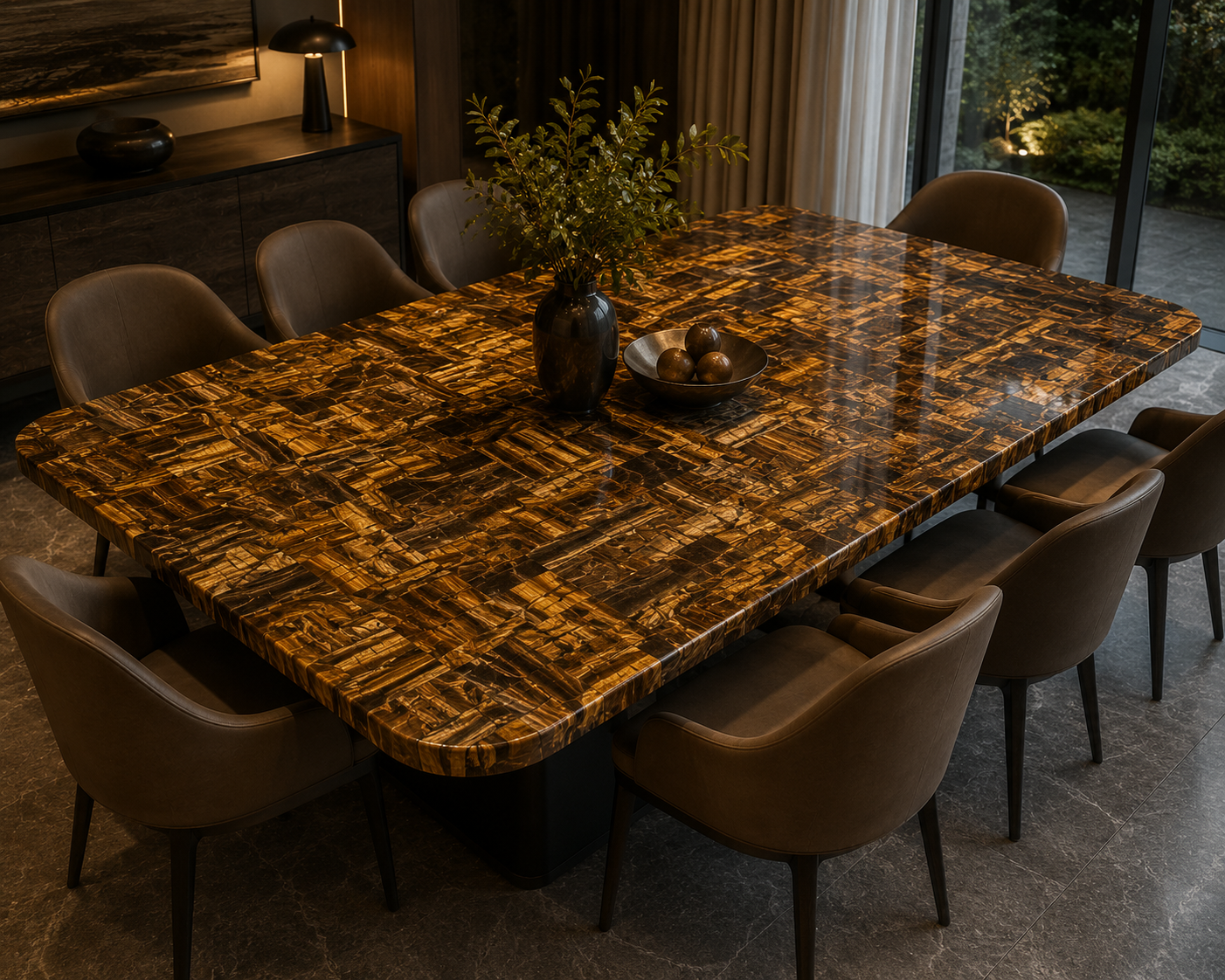
A tiger eye dining table top elevates every dining experience with a surface that is both practical and visually extraordinary. The smooth polished surface is easy to maintain for daily dining use, while the chatoyant bands provide a constantly changing visual display throughout the meal as the light shifts from natural daylight to candlelight to overhead lighting.
Tiger Eye Bathroom Vanity
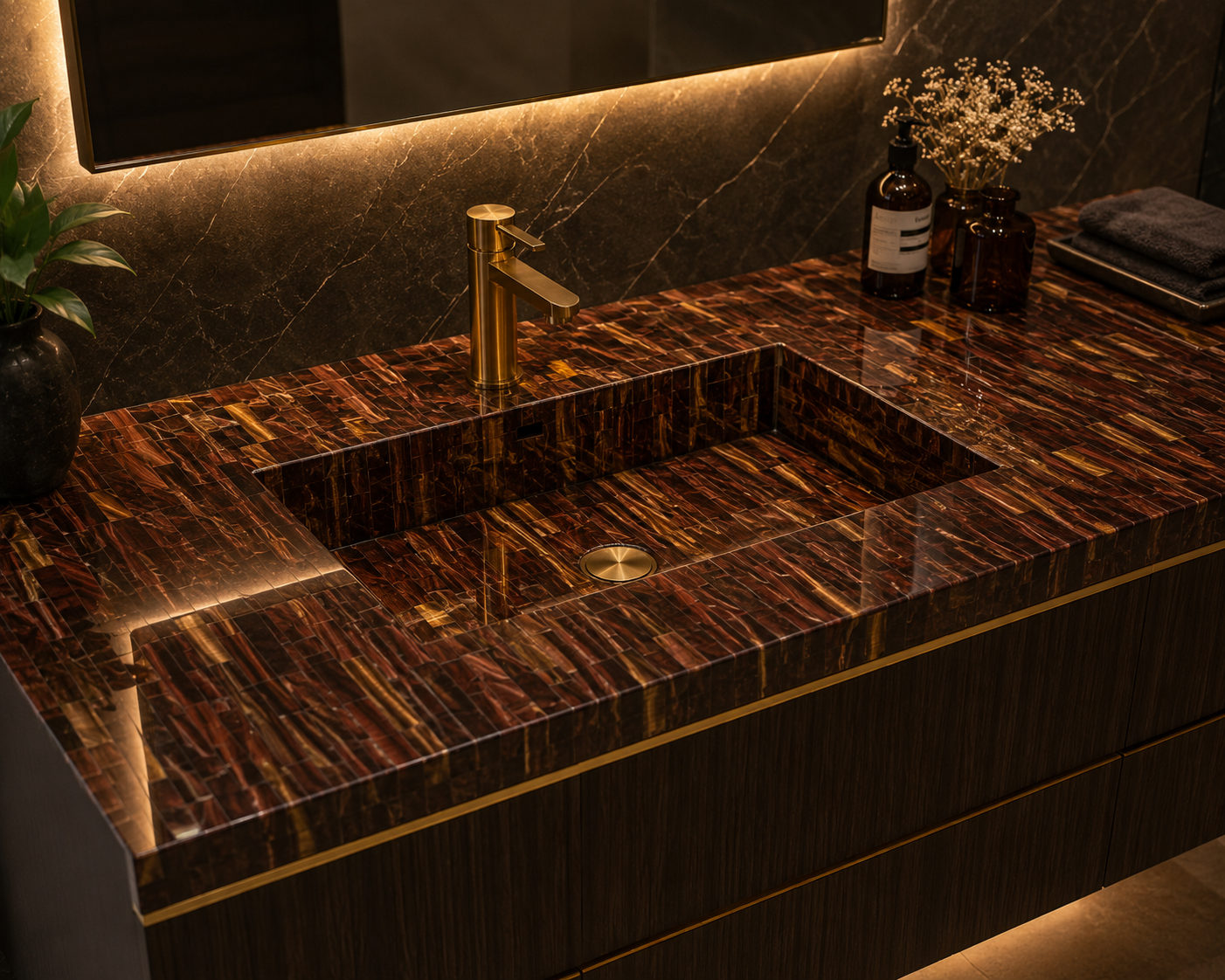
A tiger eye bathroom vanity top creates a bold and luxurious bathroom focal point. The shimmering golden and bronze chatoyant bands pair spectacularly with matte black, brushed gold and polished chrome fixtures. Subh Gem Stones manufactures tiger eye vanity tops with single and double sink cutouts, undermount support and custom edge finishing for residential, hotel and spa projects worldwide.
Which Interior Styles Suit Tiger Eye Stone Best?
Tiger eye stone complements the widest range of interior styles of any semi-precious stone due to the versatility of its colour range across six varieties. Golden Tiger Eye and Tiger Eye Wild work best in contemporary luxury, transitional and biophilic design schemes where warm organic tones anchor the interior palette. They pair beautifully with dark charcoal, rich cream, warm timber and deep forest green. Blue Tiger Eye varieties work best in contemporary minimalist, industrial and dark toned luxury interiors where the cool blue chatoyancy creates a dramatic contrast against light walls and dark architectural elements. Red Tiger Eye suits bold, maximalist and heritage inspired interiors where a deeply warm and intensely coloured natural stone surface is the design priority.
How to Care for Tiger Eye Stone Slabs
Tiger eye slabs are low maintenance and easy to care for in daily use. Clean tiger eye surfaces using a soft damp cloth and a mild pH neutral cleaner. Avoid acidic, abrasive or harsh chemical cleaners as these can gradually damage the polished surface and affect the chatoyant quality of the stone over time. For kitchen countertop and bathroom vanity applications, periodic sealing with a penetrating stone sealer is recommended to protect the surface from oil and moisture penetration. Do not use rough scrubbing pads or steel wool on polished tiger eye surfaces. With proper routine care, a tiger eye slab maintains its chatoyant brilliance and surface quality for many years.
Experience 80+ Designs at Our Kishangarh Showroom
Subh Gem Stones manufactures and exports premium semi-precious stone slabs from our 1,25,000 sq ft facility in Kishangarh, Rajasthan. Visit our Experience Center to see, touch, and compare every design before you decide. Custom sizes available for all residential, commercial, and hospitality projects.
GET IN TOUCH WITH USBuy Tiger Eye Slabs from Subh Gem Stones

Subh Gem Stones manufactures and exports premium tiger eye slabs in all six natural varieties from our 1,25,000 sq ft production facility in Kishangarh, Rajasthan. Every slab is individually polished by skilled craftspeople to preserve and enhance the natural chatoyancy of the stone. All varieties are available in custom dimensions, thicknesses and edge profiles with worldwide export delivery. Visit our Experience Center in Kishangarh to view all six tiger eye varieties in full slab format and compare their chatoyant qualities under different lighting conditions before placing your order. Contact us on WhatsApp at +91 89552 98811 or email info@subhgemstones.in for pricing, dimensions and project consultation.
Frequently Asked Questions
1. What is tiger eye stone?
Tiger eye is a natural semi-precious gemstone in the quartz family, formed when fibrous crocidolite minerals are replaced by silica while retaining their parallel fibrous structure. This structure creates chatoyancy, the shimmering light shifting optical effect that makes tiger eye one of the most visually distinctive natural stone surfaces in luxury interior design. Tiger eye has a Mohs hardness of 6.5 to 7 and is used for countertops, wall panels, furniture and decorative applications.
2. What is chatoyancy in tiger eye stone?
Chatoyancy is the rare optical phenomenon where a polished gemstone displays a moving band of reflected light that shifts across the surface as viewing angles change. In tiger eye, chatoyancy is caused by parallel fibrous silica structures within the mineral reflecting light at the same angle simultaneously, producing a shimmering band of light that appears to glide across the surface. This is why tiger eye is sometimes called the cat’s eye stone. Chatoyancy is most dramatic under directional lighting such as kitchen spotlights and natural window light.
3. Which tiger eye variety is best for a kitchen countertop?
Golden Tiger Eye and Tiger Eye Wild are the most popular choices for kitchen countertops due to their warm gold and bronze tones that complement dark cabinetry and metallic kitchen hardware. Tiger Eye Random works well for a more organic, less structured surface pattern. Blue Tiger Eye varieties suit contemporary and minimalist kitchen designs where a cooler stone tone is preferred. Subh Gem Stones manufactures all six tiger eye varieties as kitchen countertops in custom dimensions from Kishangarh.
4. What interior styles suit tiger eye stone?
Golden Tiger Eye suits contemporary luxury, transitional and biophilic interiors with warm dark cabinetry and timber elements. Blue Tiger Eye works best in contemporary minimalist and dark-toned luxury interiors. Red Tiger Eye suits maximalist and heritage-inspired bold interior schemes. Tiger Eye Wild is ideal wherever a statement surface with strong colour contrast is the design priority.
5. How do I buy tiger eye slabs from Subh Gem Stones?
Contact Subh Gem Stones by WhatsApp at +91 89552 98811, by email at info@subhgemstones.in, or visit our Experience Center at 350/171, Makrana Road, Kishangarh, Rajasthan. Share your required stone variety, dimensions, thickness, finish type and quantity. Our team will respond with pricing, availability and a project timeline. International buyers can request high resolution photographs and stone samples before confirming their order.