

Gemstone Slabs: Nature Crafted Into Luxury
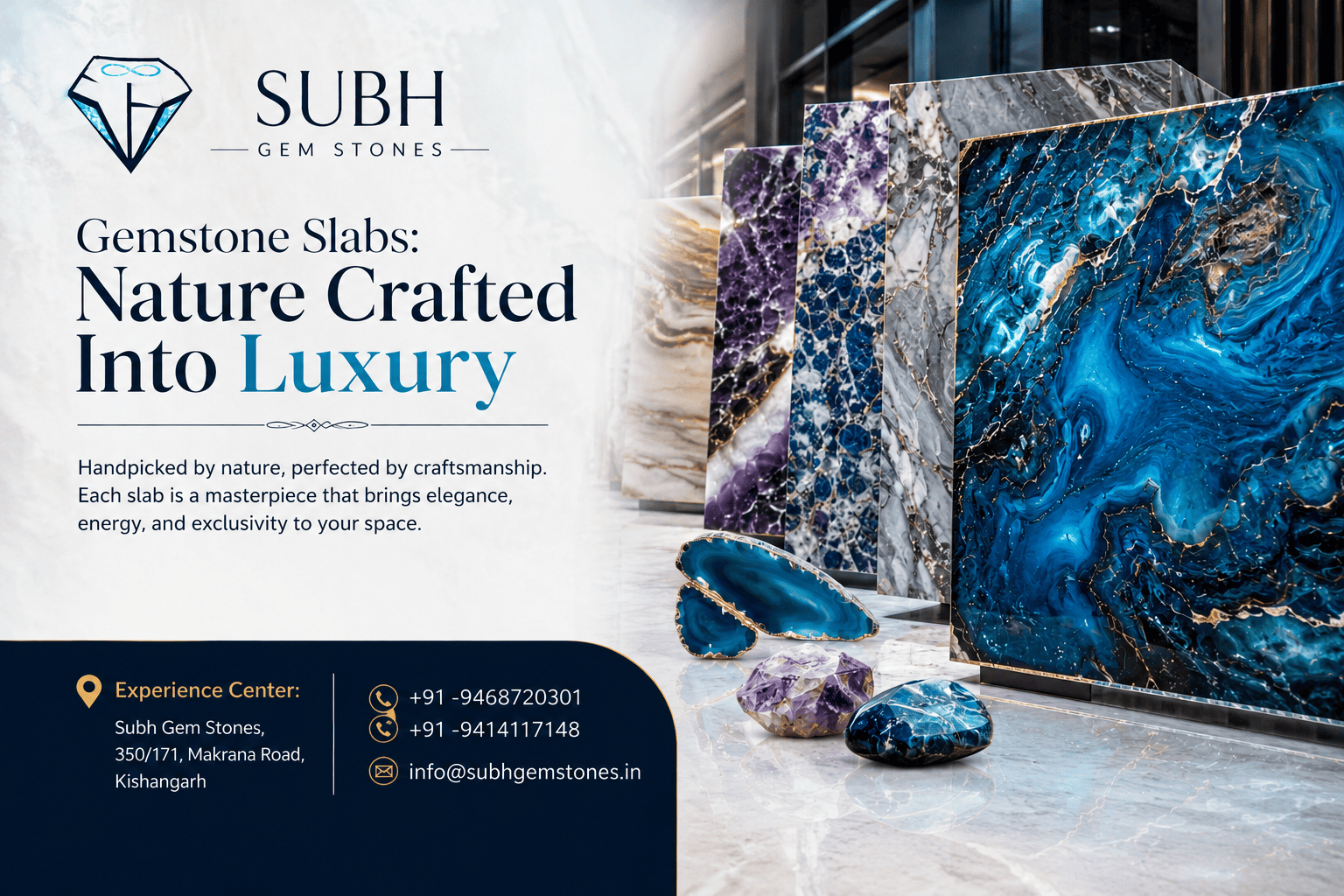
Gemstone slabs are where the patience of the earth meets the precision of the craftsman. Formed over millions of years beneath the surface, semi-precious stones such as agate, quartz, amethyst, and jasper are transformed into polished, large format slabs that bring an irreplaceable depth of color and pattern to any interior.
What Are Gemstone Slabs?
A gemstone slab is a large, thin sheet cut from a natural semi-precious stone and finished to expose its full color, veining, and translucency. Unlike ceramic or engineered surfaces, no two slabs are ever identical. Each piece carries the distinct mineral composition, banding, and pigmentation of the individual stone from which it was cut.
The most widely used stones in slab production include agate, amethyst, white and grey quartz, jasper, onyx, and fossil stone. Each stone variety offers its own color palette, structural characteristics, and light response qualities that make it ideal for specific design applications.
The Art of Crafting a Gemstone Slab
Producing a gemstone slab is a disciplined process that combines geological knowledge, mechanical precision, and surface finishing expertise. At Subh Gem Stones, every slab passes through a structured production process across six specialised units at our 1,25,000 sq ft manufacturing facility in Kishangarh, Rajasthan.
1
Stone Selection
Raw material is assessed for structural integrity, color consistency, and pattern quality before production begins.
2
Precision Cutting
Diamond tipped and water cooled machinery slices stone into thin, uniform sheets without compromising natural patterning.
3
Surface Finishing
Each slab is polished in multiple stages to bring out its natural luster, depth of color, and translucency.
4
Resin Treatment
A food safe resin or epoxy coat is applied where needed to enhance surface strength and resistance to staining.
The finished slab is strong, smooth, and ready for residential, commercial, or hospitality applications. Custom sizing is available across all our collections to suit individual project specifications.
The Science Behind Their Durability
The durability of gemstone slabs is not simply a matter of aesthetics. It is rooted in the mineralogical properties of the stones themselves.
| Gemstone Slab | Properties & Applications |
|---|---|
| Quartz Slabs | Register 7 on the Mohs hardness scale, making them highly resistant to scratching and thermal damage. Ideal for kitchen countertops and high use surfaces. |
| Agate Slabs | Dense, microcrystalline formations of silica. The banded structure resists cracking and maintains polished finish over years of use. |
| Non Porous Surface | Properties across most gemstone slab varieties prevent absorption of moisture, bacteria, or household liquids, making maintenance simple and hygienic. |
| Jasper Slabs | Opaque and extremely compact, offering excellent resistance to impact and abrasion in wall panels and flooring applications. |
| Amethyst and Onyx Slabs | Moderately translucent, allowing backlighting to create dramatic light effects in feature walls and luxury furniture pieces. |
Where Are Gemstone Slabs Used?
The versatility of gemstone slabs is one of their strongest design advantages. A single material can transition elegantly from a kitchen surface to a statement wall to a custom furniture piece.
| Application | Best Stone Types | Design Benefit |
|---|---|---|
| Kitchen Countertops | Quartz, Agate, Jasper | Heat and scratch resistance with natural luxury aesthetics |
| Bathroom Vanities | Onyx, Amethyst, White Quartz | Moisture resistance and spa like ambiance |
| Accent and Feature Walls | Agate, Amethyst, Fossil Stone | Backlit translucency creates dramatic focal points |
| Dining and Coffee Tables | Agate, Jasper, Quartzite | Each tabletop is one of a kind with natural pattern variation |
| Flooring and Staircases | Quartz, Jasper, Fossil Stone | Durability and underfoot luxury for high traffic areas |
| Decorative Coasters and Accessories | Agate, Amethyst, Onyx | Small format applications that bring gemstone beauty to daily living |
Why Gemstone Slabs Are Gaining Global Demand?
The global interior design industry has seen a marked shift toward natural, tactile materials over the past decade. Gemstone slabs sit at the intersection of three key demand drivers.
Three Reasons Designers Choose Gemstone Slabs
Exclusivity. No two slabs share the same pattern. For luxury residential and hospitality projects where uniqueness is non negotiable, gemstone slabs deliver what manufactured surfaces simply cannot.
Sustainability. Extracted from natural deposits and processed without synthetic polymers in most cases, semi-precious stone slabs are an environmentally responsible alternative to plastic based composite surfaces.
Longevity. A well maintained gemstone slab countertop or wall panel can retain its finish and structural integrity for decades, making it a sound long term investment rather than a short term design trend.
Popular Gemstone Varieties at a Glance
Understanding the specific characteristics of each stone helps you make the right selection for your project.
Agate Gemstone Slabs
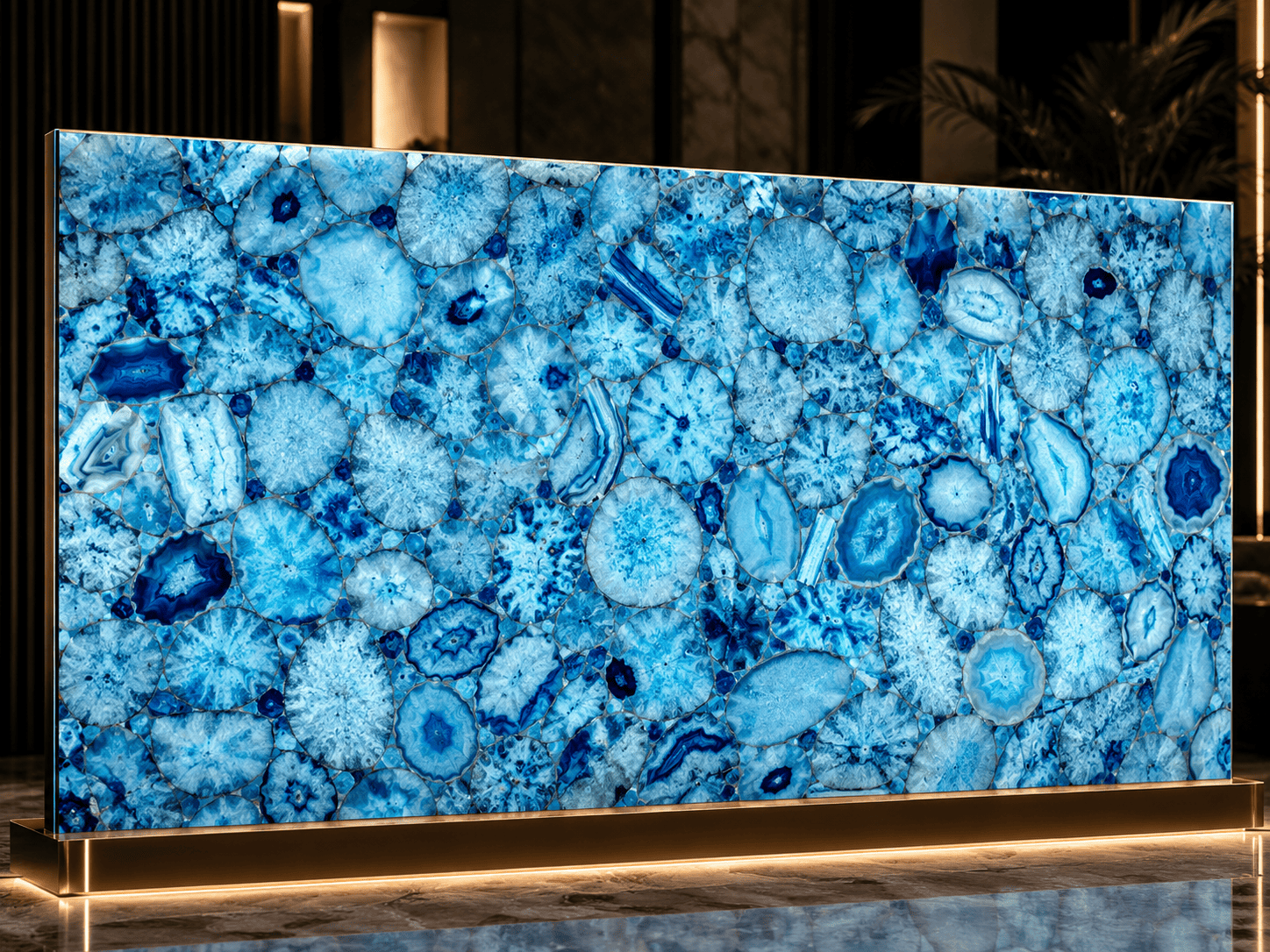
Agate is prized for its concentric banding patterns in earthy tones of amber, brown, white, and grey. Agate slabs are semi translucent and particularly popular for backlit bar tops, feature walls, and tabletops where light play is desired.
Amethyst Gemstone Slabs
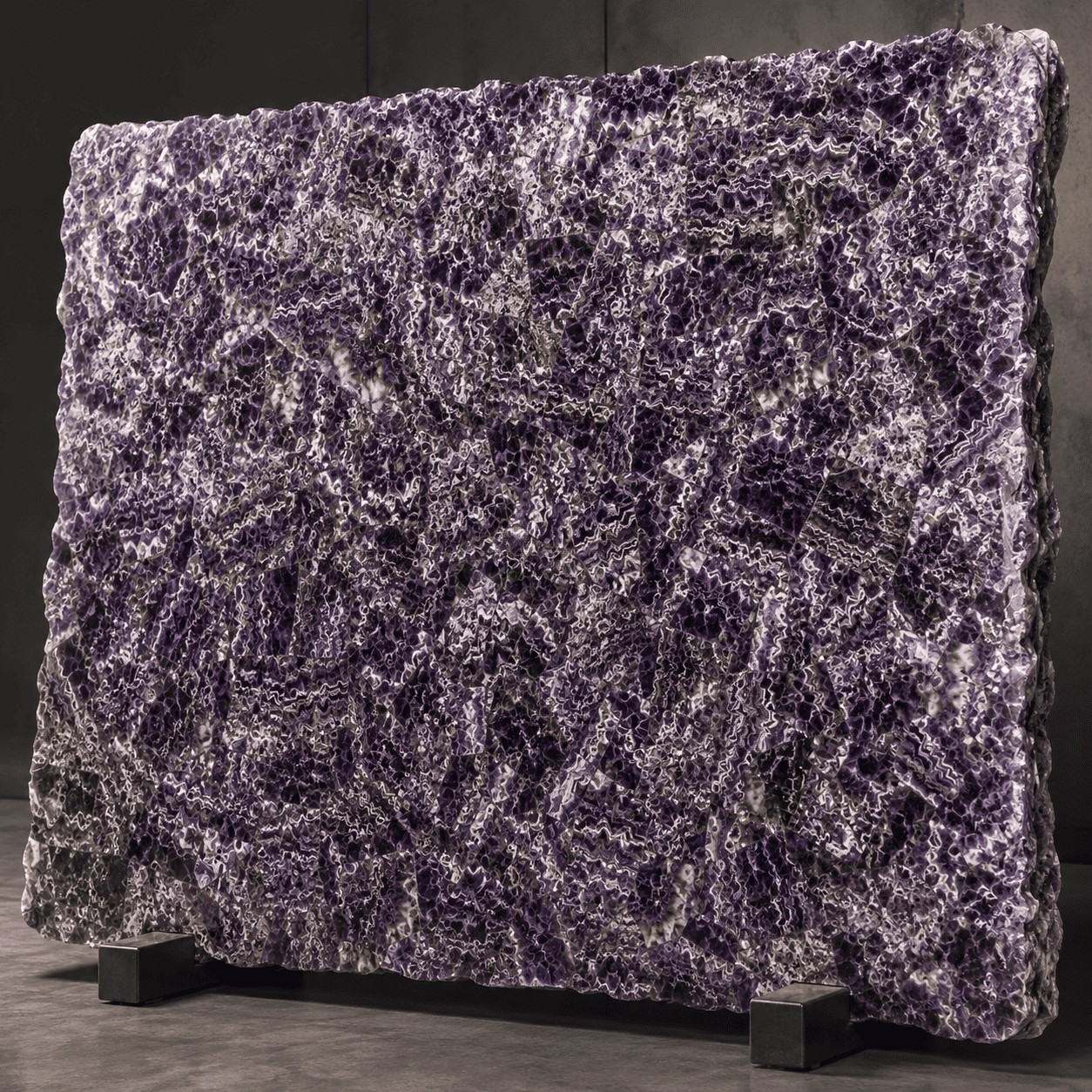
Amethyst brings deep violet hues to interior spaces. Available in both raw geode style formations and polished flat slabs, amethyst is commonly used in luxury hotel lobbies, statement staircases, and bespoke furniture.
Quartz Gemstone Slabs
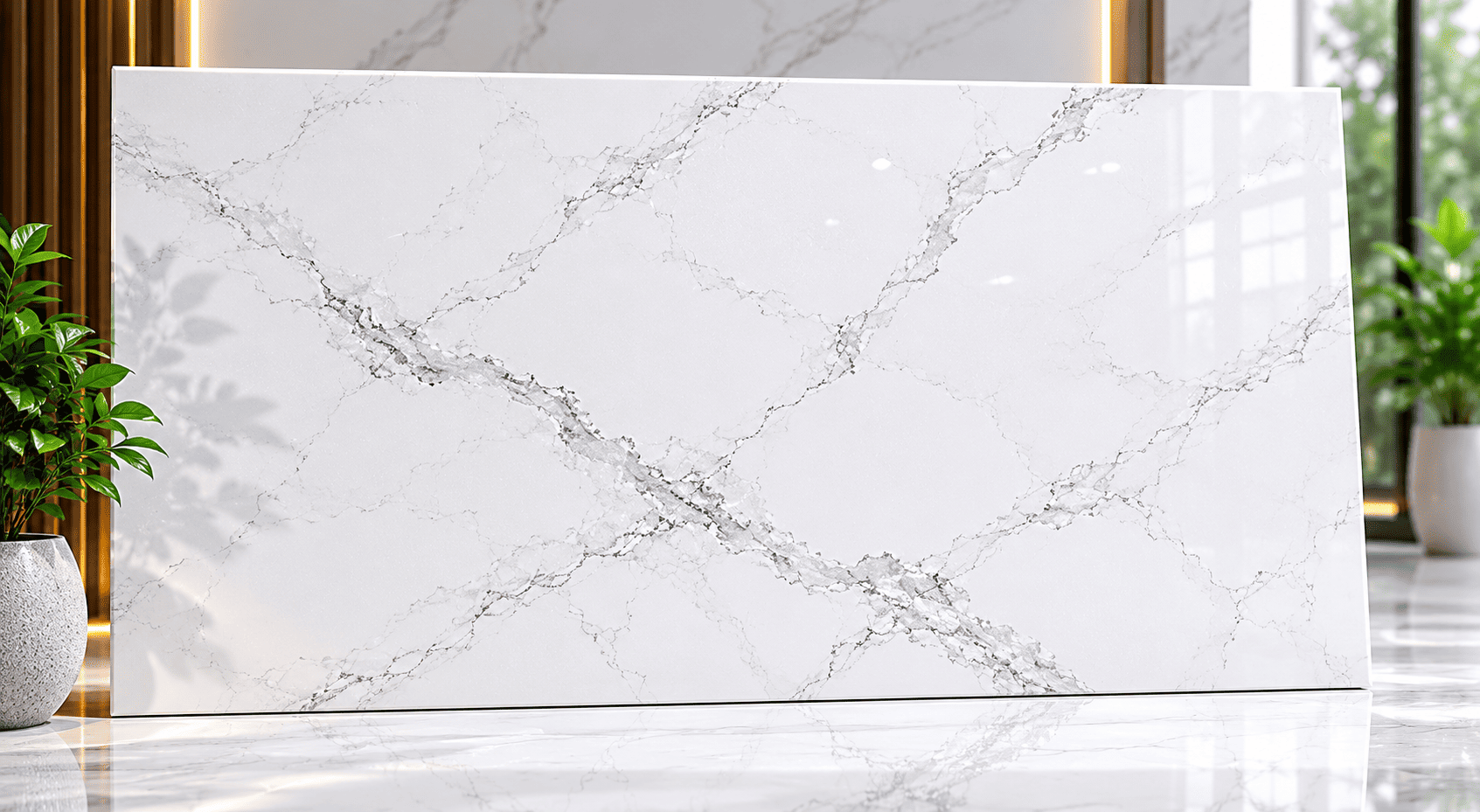
White, grey, and rose quartz varieties are among the most structurally robust semi-precious stones available. Their relatively consistent coloration and exceptional hardness make them the preferred choice for functional surfaces like kitchen countertops and bathroom vanities.
Jasper Gemstone Slabs
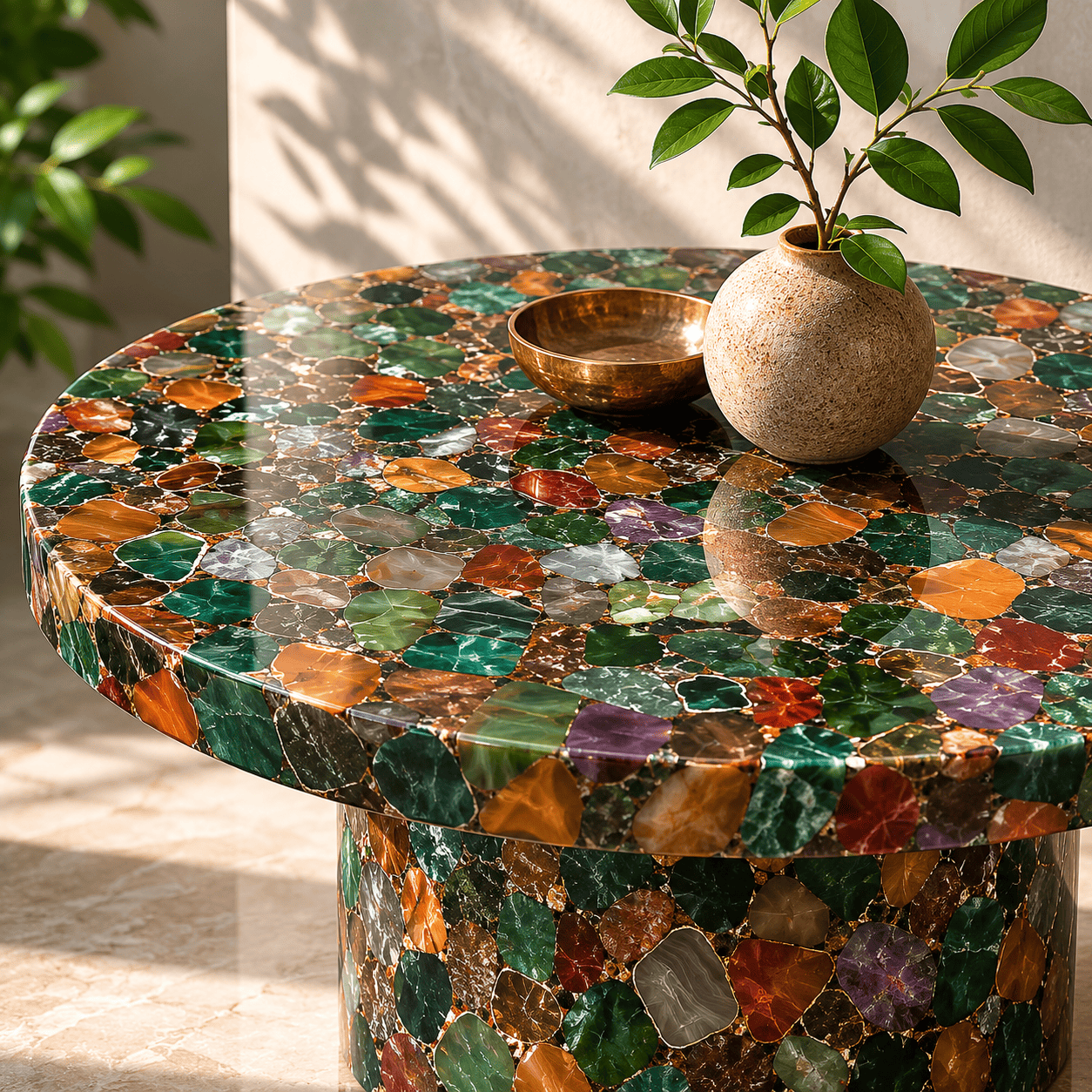
Jasper is an opaque stone with rich, earthy tones ranging from deep red and mustard to olive green. Its density makes it ideal for flooring, wall cladding, and outdoor applications where structural strength is as important as visual appeal.
Fossil Stone Slabs
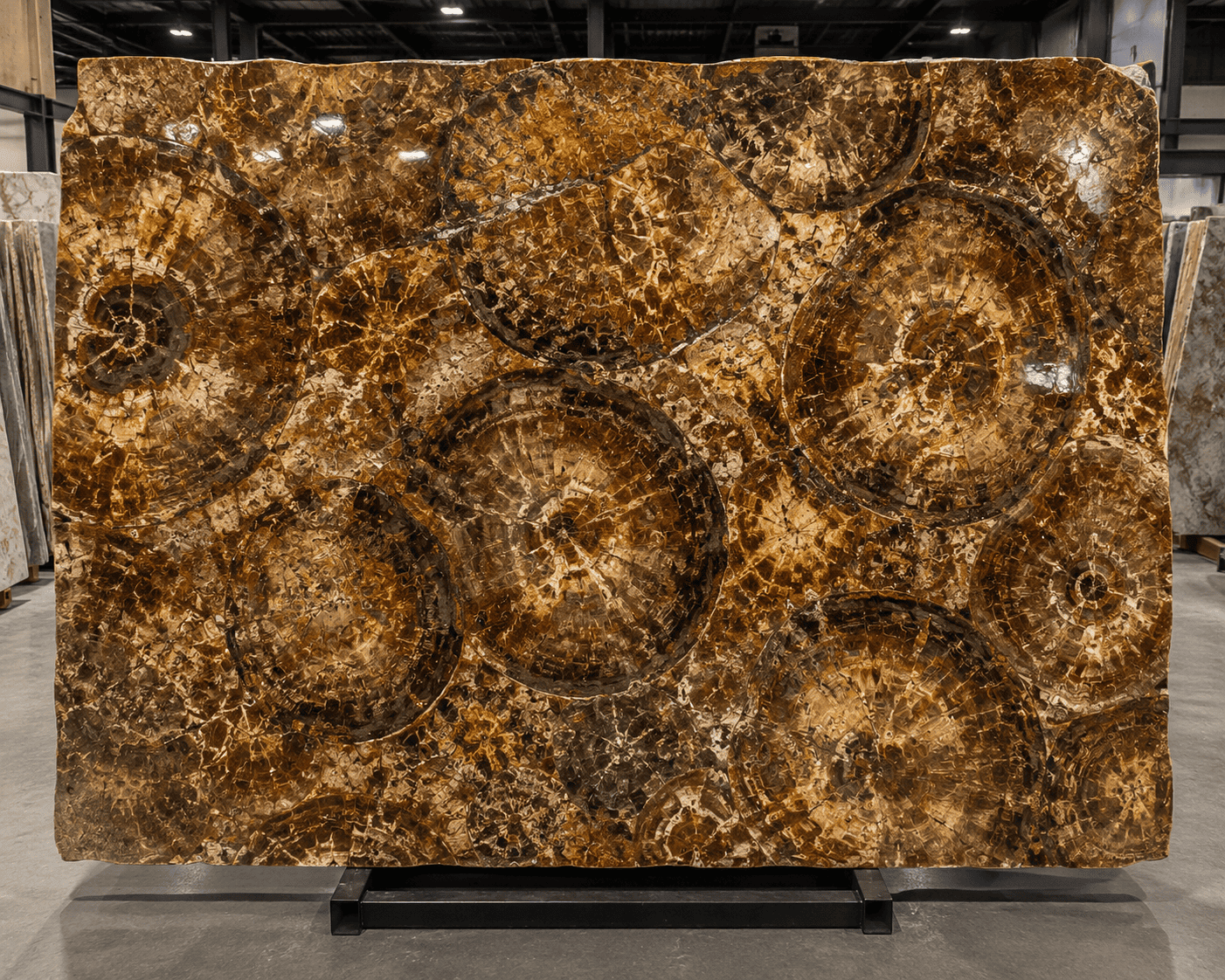
Fossil stone is a unique category in which ancient marine fossils are preserved within the stone matrix. The organic patterning makes every slab a geological artifact and a design statement simultaneously.
Frequently Asked Questions
1. What are gemstone slabs made from?
Gemstone slabs are made from semi-precious stones such as agate, amethyst, quartz, jasper, onyx, and fossil stone. These natural stones are cut into thin, polished sheets suitable for use as countertops, wall panels, tabletops, and decorative surfaces.
2. Are gemstone slabs durable enough for kitchen countertops?
Yes. Quartz-based gemstone slabs in particular are highly resistant to heat and scratching, making them well suited for kitchen countertop applications. Most gemstone slabs are also non-porous, which means they resist staining and moisture absorption.
3. Where can I buy gemstone slabs in India?
Subh Gem Stones is a leading gemstone slab manufacturer and exporter based in Kishangarh, Rajasthan. They offer 80+ semi-precious stone slab designs and export to 25+ countries. You can visit their Experience Center in Kishangarh or reach out through subhgemstones.com.
4. Can gemstone slabs be customised in size?
Yes. Subh Gem Stones offers custom sizing across all gemstone slab collections, making them suitable for residential projects as well as large scale commercial and hospitality installations.
5. What is the difference between a gemstone slab and a regular marble slab?
Marble is a metamorphic rock formed from limestone. Gemstone slabs are cut from semi-precious stones such as agate, amethyst, or quartz, which have distinct mineral compositions, color intensities, and translucency properties that marble does not possess. Gemstone slabs are typically rarer, more visually dramatic, and more exclusive than standard marble.
Experience 80+ Designs at Our Kishangarh Showroom
Subh Gem Stones manufactures and exports premium semi-precious stone slabs from our 1,25,000 sq ft facility in Kishangarh, Rajasthan. Visit our Experience Center to see, touch, and compare every design before you decide. Custom sizes available for all residential, commercial, and hospitality projects.
GET IN TOUCH WITH US