

Selenite Slab for Backlit Walls — The Complete Design & Buying Guide 2026
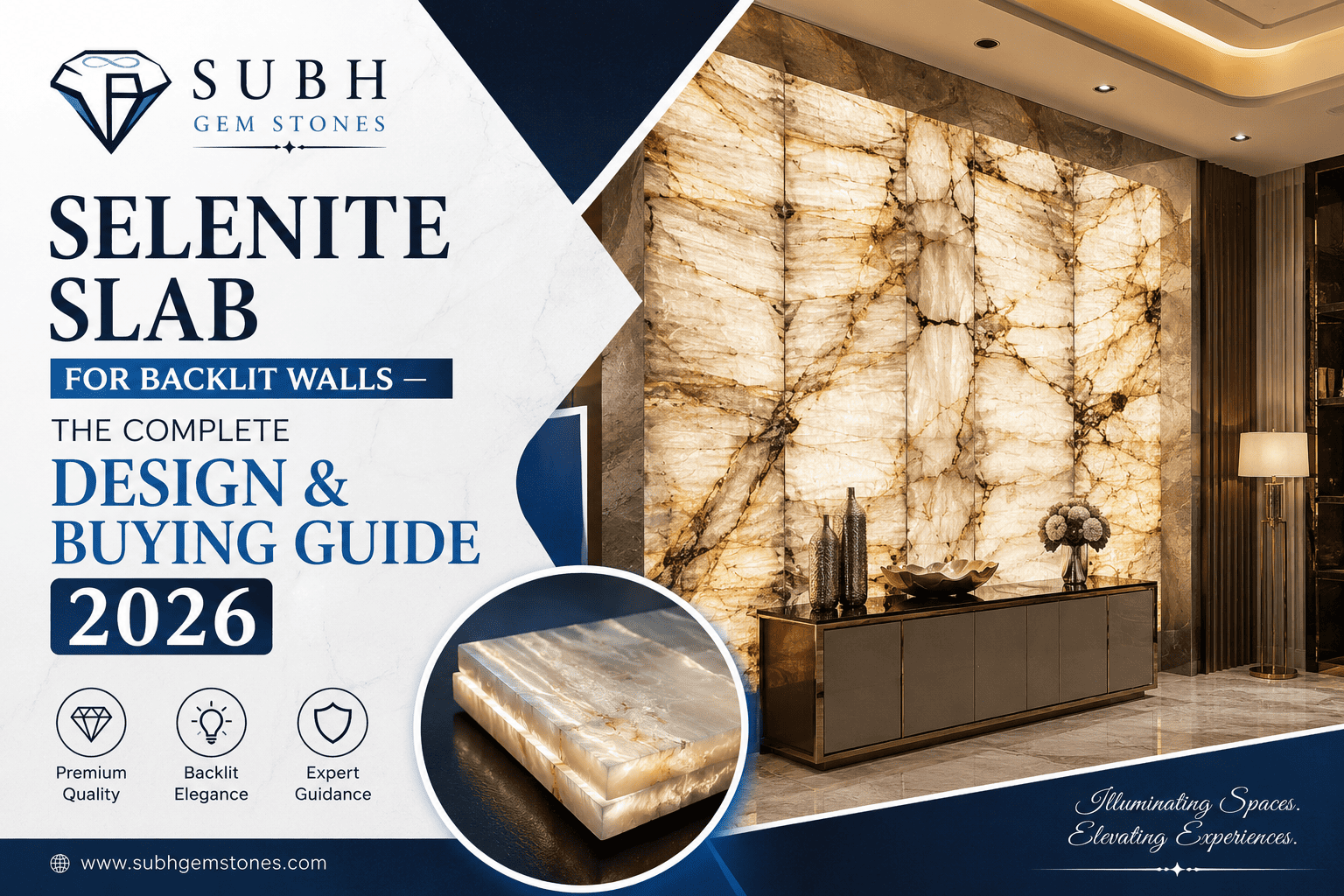
If you are specifying materials for a backlit feature wall and you have not yet considered selenite slab, this guide is for you. Selenite is a natural translucent gypsum stone that, when installed against a recessed LED light source, produces one of the most distinctive and atmospheric effects available in luxury interior design a soft, even, pearlescent white glow that transforms any wall, ceiling, or partition surface into a quietly luminous focal point of extraordinary beauty.
This guide covers everything: what selenite slab is, why it works better than onyx for certain backlit applications, the correct specification (thickness, LED temperature, installation method), and how to buy selenite slabs directly from a manufacturer in India at the best price.
What Is a Selenite Slab?
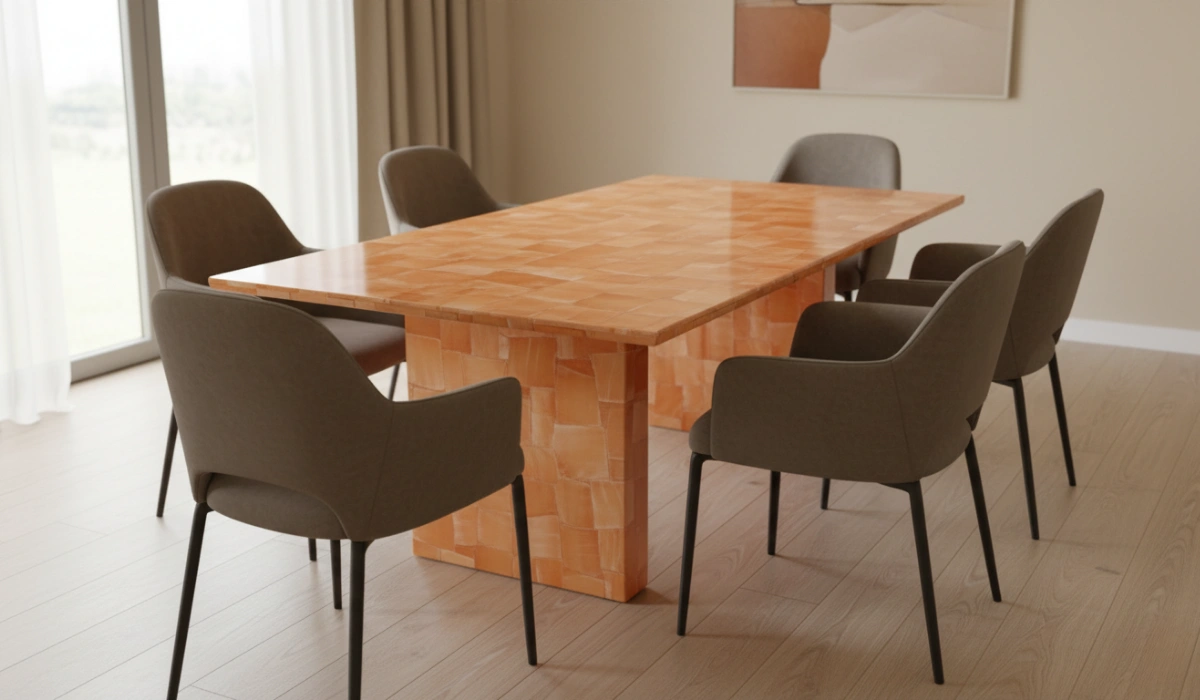
Selenite is a variety of crystallised gypsum chemical composition CaSO₄·2H₂O formed through the evaporation of mineral rich water in sedimentary basins over millions of years. It is named after Selene, the Greek goddess of the moon, because of the soft lunar glow it emits when light passes through its fibrous crystalline structure.
Key properties that define selenite slab as a material:
• Mohs hardness: 2 selenite is a soft mineral, significantly softer than marble (3–4), onyx (6.5–7), or granite (6–7). This means it is not a surface material for countertops, floors, or kitchen applications its value is entirely in its translucency and atmospheric light quality for wall and ceiling installations
• Translucency: high selenite’s fibrous crystalline structure allows LED light to pass through evenly from behind, producing a uniform glow across the full slab surface without hot spots or shadow banding
• Colour: pearlescent white to soft cream each selenite slab has a slightly unique shade and grain direction in its fibrous crystal markings, ensuring no two panels in any installation are identical
• Weight: lighter than most natural stones an important practical advantage for ceiling panel applications where weight loading is a structural consideration
Selenite Slab vs Onyx — Which Is Better for Your Backlit Wall?
The most common specification question for backlit walls is: selenite or onyx? Both are translucent natural stones. Both glow when backlit. But they produce fundamentally different visual effects and suit different project briefs.
Choose Selenite when:
• You want a soft, even, atmospheric glow across a large wall or ceiling surface area
• The design brief calls for a calm, spa like, meditative quality of light
• The installation is a ceiling panel where weight must be minimised
• Budget is a primary consideration selenite is generally more price accessible than onyx
• A uniform, consistent white light effect is preferred over dramatic veining
Choose Onyx when:
• The design brief requires bold, dramatic illuminated veining in a smaller statement panel format
• The backlit panel is also a countertop or surface requiring Mohs 6.5+ hardness
• A specific onyx colour honey, green, black, or red is needed for the design palette
• Maximum visual drama and high contrast are the primary design goals
For most large format backlit feature wall and ceiling applications, selenite slab is the superior specification choice providing a more even, cost effective, and installation friendly translucent stone surface.
Experience 80+ Designs at Our Kishangarh Showroom
Subh Gem Stones manufactures and exports premium semi-precious stone slabs from our 1,25,000 sq ft facility in Kishangarh, Rajasthan. Visit our Experience Center to see, touch, and compare every design before you decide. Custom sizes available for all residential, commercial, and hospitality projects.
GET IN TOUCH WITH USSelenite Slab Specifications — What to Know Before Ordering
Getting the specification right before ordering is critical for a successful backlit selenite wall installation:
• Thickness: 10–15 mm for maximum light transmission. 15–20 mm where structural panel strength is also needed. Do not specify over 25 mm for backlit applications the stone becomes too dense to transmit light effectively.
• LED colour temperature: Warm white 2700K–3500K. This colour temperature enhances selenite’s natural pearlescent white and soft cream tones. Avoid cool white (5000K+) it creates a clinical blue white effect that conflicts with the warm, lunar quality selenite is specified for.
• LED placement: 5–10 cm behind the back face of the selenite panel. Closer placement creates hot spots. Further placement reduces light intensity.
• Panel joints: Fill with clear two part epoxy resin not standard tile grout. Dark grout lines become visible dark bands across a backlit selenite wall.
• Surface finish: Polished finish for maximum light reflection across the face. Satin for a softer, more diffused surface effect.
How to Install Selenite Slab Panels Step by Step
Step 1 — Frame and LED System: Construct a recessed aluminium or steel sub frame set 5–10 cm proud of the wall surface to house the LED strips and create the light cavity behind the selenite.
Step 2 — LED Installation: Install warm white LED strip lights or LED panel units across the back of the frame. Ensure even coverage with no dark zones. Use a diffuser film behind the selenite if strips are used rather than panel units.
Step 3 — Panel Fixing: Fix selenite panels to the front of the frame using stone specific silicone adhesive and stainless steel mechanical clips or pin fixings. Never rely on adhesive alone for panels larger than 600 × 600 mm.
Step 4 — Jointing: Fill all joints between panels with a clear or translucent two part epoxy resin, applied flush with the panel face and polished smooth once cured.
Step 5 — Sealing: Apply a penetrating mineral sealer to the face of all selenite panels to protect against fingerprints and surface dust. Reapply annually. Avoid water based cleaners, as selenite is water soluble and should not be exposed to sustained moisture.
How to Buy Selenite Slabs in India — Best Price from Manufacturer?
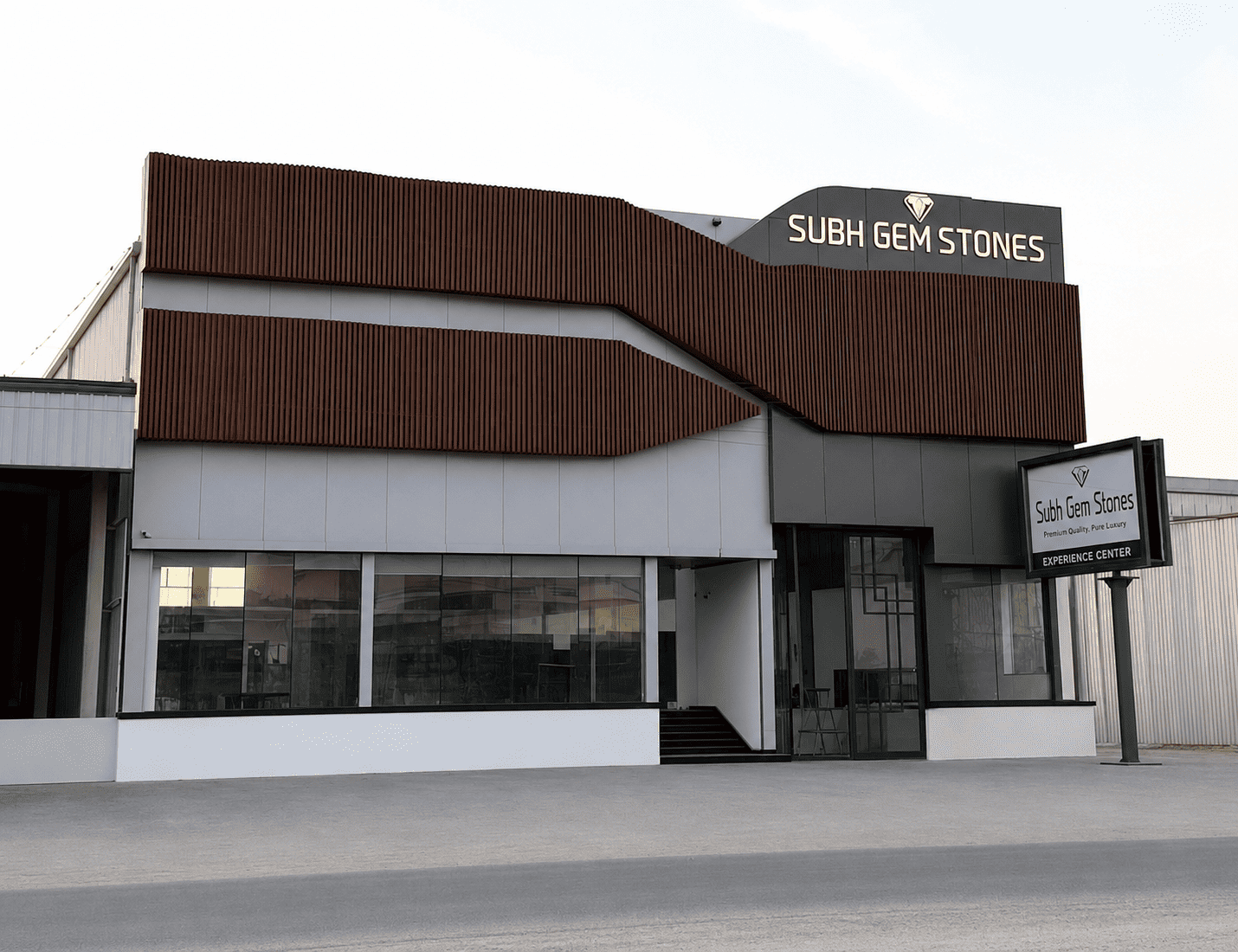
For buyers sourcing selenite slabs in India, purchasing directly from a manufacturer in Kishangarh, Rajasthan delivers the best combination of price, quality, and custom sizing. Kishangarh is India’s primary gemstone slab manufacturing and export hub and Subh Gem Stones operates a 1,25,000 sq ft production facility there, manufacturing selenite slabs for buyers across 25 countries.
• Custom sizing: selenite panels cut to your exact project dimensions
• Both variants: standard smooth selenite panels and Selenite Brick available
• Direct manufacturer pricing: no distributor margin; best selenite slab price in India
• Global export: full export documentation, international shipping to 25+ countries
• Expert consultation: specification advice on thickness, LED setup, and panel sizing for your specific project
Request a Selenite Slab Sample or Quote
Contact Subh Gem Stones for current selenite slab pricing, project samples, and specification support.
Call / WhatsApp: +91-9468720301 | +91-8955298811 | +91-8233202376
Browse: Selenite Slab Collection at Subh Gem Stones → | Submit Enquiry →
Frequently Asked Questions
1. What is a selenite slab?
A selenite slab is a natural translucent stone panel made from crystallised gypsum (CaSO₄·2H₂O). Named after the Greek goddess of the moon, selenite is prized for its capacity to diffuse LED light through its fibrous crystalline structure, creating a soft, even, ethereal white glow when backlit. It has a Mohs hardness of 2, making it ideal for wall panels, ceiling tiles, and partition screens not for countertops or flooring. Subh Gem Stones manufactures selenite slabs in two varieties standard smooth panels and Selenite Brick from our Kishangarh, Rajasthan facility.
2. Can selenite slabs be backlit?
Yes. Selenite is one of the most translucent natural stones available and is specifically manufactured for backlit applications. The crystalline gypsum structure of selenite allows LED light to pass through the slab evenly, eliminating hot spots and creating a uniform, warm, pearlescent glow across the entire surface. For optimal backlighting, slabs should be 10–15 mm thick. Warm white LED strips at 2700K–3500K produce the best glow effect with natural selenite’s white and cream tones.
3. How fragile is selenite stone?
Selenite registers a hardness of Mohs 2 on the mineralogical hardness scale making it one of the softer natural stones used in luxury interior design. This means selenite panels require careful handling during transport and installation, and should not be used in high traffic surface applications such as countertops, floors, or kitchen surfaces. When properly installed as a wall panel or ceiling tile using appropriate mechanical fixing and backing systems, selenite is a long lasting and low maintenance surface material.
4. What thickness of selenite slab is recommended for backlit use?
For maximum light transmission and the best backlit glow effect, selenite slabs of 10 mm to 15 mm thickness are recommended. At this thickness, the stone transmits light evenly without creating dense shadowed areas or hot spots. Slabs of 20 mm can be used where additional structural strength is needed for larger format ceiling panels, but translucency is reduced. Slabs thicker than 25 mm are generally not recommended for backlit applications.
5. How do you install selenite slab panels?
Selenite slab panels are installed using a recessed LED frame system mounted to the wall or ceiling structure, with the selenite panel fixed to the front of the frame using a combination of stone specific adhesive and stainless steel mechanical fixings. The LED light source sits 5–10 cm behind the selenite surface to ensure even light distribution. Joints between panels should be filled with clear epoxy resin to maintain visual continuity when lit. Professional installation by a stone specialist familiar with semi-precious slab panels is strongly recommended.
6. What is the price of selenite slabs?
Selenite slab price varies based on panel size, thickness, quantity, and delivery destination. As a direct manufacturer from Kishangarh, Rajasthan India’s primary gemstone slab hub Subh Gem Stones offers competitive selenite slab pricing with no distributor margin. Contact our team at +91-9468720301 or +91-8955298811, or submit an enquiry at subhgemstones.com/contact-us/ for a project-specific quotation.
6. Is selenite better than onyx for backlit walls?
Both selenite and onyx are excellent backlit wall materials but produce different visual effects. Selenite delivers a soft, uniform, atmospheric moon glow effect ideal for large surface backlit walls and ceiling panels. Onyx produces a more dramatic, high contrast illuminated veining effect best suited to smaller statement panels. Selenite is generally more accessible in price, lighter in weight, and better for ceiling installations. Choose selenite for soft, even ambience; choose onyx for bold, dramatic vein illumination.